
Are We Expecting Too Much from a Graphic Designer?
Table of Contents
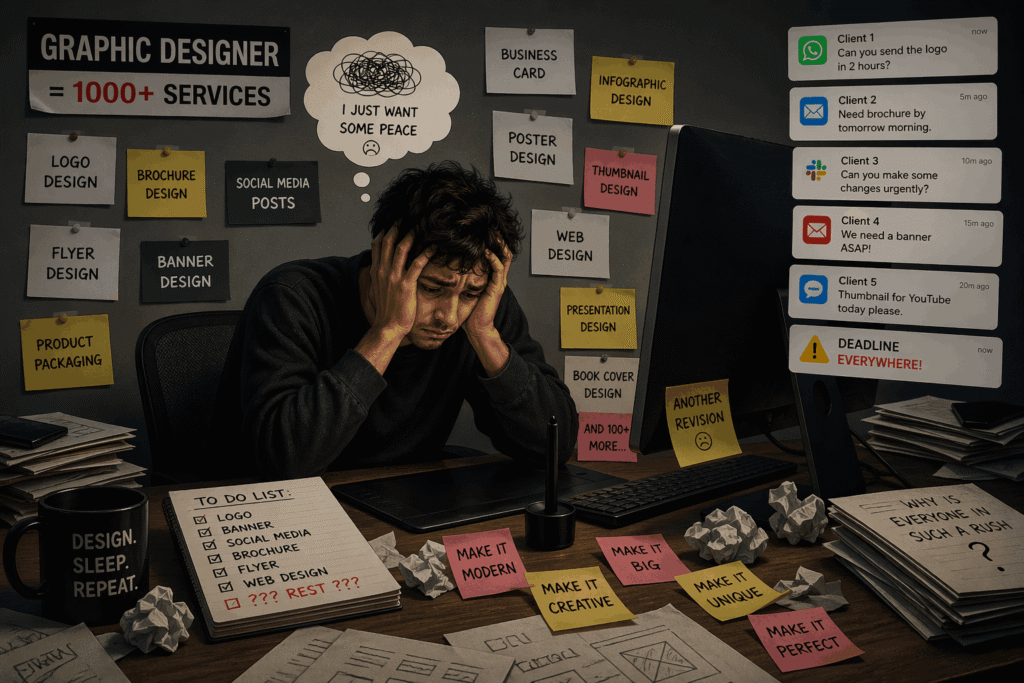
ToggleIn today’s digital world, the role of a graphic designer is rapidly evolving. Businesses now expect designers to handle not just visual design, but also video editing, web design, motion graphics, and even social media strategy.
But is this really the responsibility of a graphic designer?
Let’s break it down in a simple and practical way.
What Does a Graphic Designer Really Do?
A graphic designer’s core job is to communicate ideas visually. According to American Institute of Graphic Arts, design is about solving problems through visual communication.
This includes creating:
- Social media posts
- Posters and advertisements
- Branding elements (logos, business cards, etc.)
- Marketing creatives
The focus is not just on appearance – it’s about delivering the right message to the right audience.
Learn more about design principles from
Interaction Design Foundation (https://www.interaction-design.org/literature/topics/graphic-design)
The Growing Expectations
Today, many businesses look for “all-in-one” creatives. A single designer is often expected to manage:
- Video Editing
- Website Design
- Motion Graphics
- Digital Marketing Creatives
While these are valuable skills, they belong to different specialized areas.
For example, motion graphics is a separate discipline explained by
Adobe After Effects experts here:
https://www.adobe.com/products/aftereffects.html

Why Design Needs Time and Focus?
Good design is not created in minutes. It requires:
- Time to Create
Design involves research, planning, and execution. Rushing this process reduces quality.
- Creative Thinking
Designers need time to explore ideas and develop unique concepts.
- Relatable Concepts
A design should connect with the audience emotionally and culturally.
- Trend Awareness
Designers must stay updated with current trends.
Stay updated with trends via
Behance
https://www.behance.net/
The Struggles of a Graphic Designer in Today’s Hiring Market
One of the biggest challenges designers face today is during the hiring process.
Many job descriptions demand multiple skills like video editing, motion graphics, and web development – all under one role. This creates several struggles:
- Unrealistic Expectations – One person is expected to master multiple professions.
- Low Compensation for High Skill Sets – Pay often does not match the workload.
- Creative Pressure – Constant task-switching reduces quality.
- Lack of Role Clarity – Designers are unsure of their actual role.
- Limited Growth – Designers become generalists without depth.
Industry hiring trends can be explored on
LinkedIn
https://www.linkedin.com/jobs/

The Problem with "Do Everything” Roles
When a designer is expected to handle everything, it often leads to:
- Creative burnout
- Lower quality work
- Lack of innovation
- Missed deadlines
Instead of mastering one area, the designer is forced to divide attention across multiple tasks.
Read more about creative burnout from
Harvard Business Review
https://hbr.org/
Multi-Skilled vs Overloaded
There is a difference:
- A multi-skilled designer chooses to learn and grow.
- An overloaded designer is forced to do everything without resources.
Learning multiple skills is great. But expecting one person to do everything is not realistic.

What Businesses Should Understand
If you want high-quality design, you need to:
- Give designers enough time
- Respect the creative process
- Understand role specialization
- Focus on quality over quantity
Learn about branding importance from
Forbes
https://www.forbes.com/
Good design is an investment, not just a task.
Final Thoughts
A graphic designer can do many things – but that doesn’t mean they should do everything.
Great design doesn’t come from doing more work.
It comes from better thinking, clear concepts, and creative focus.